
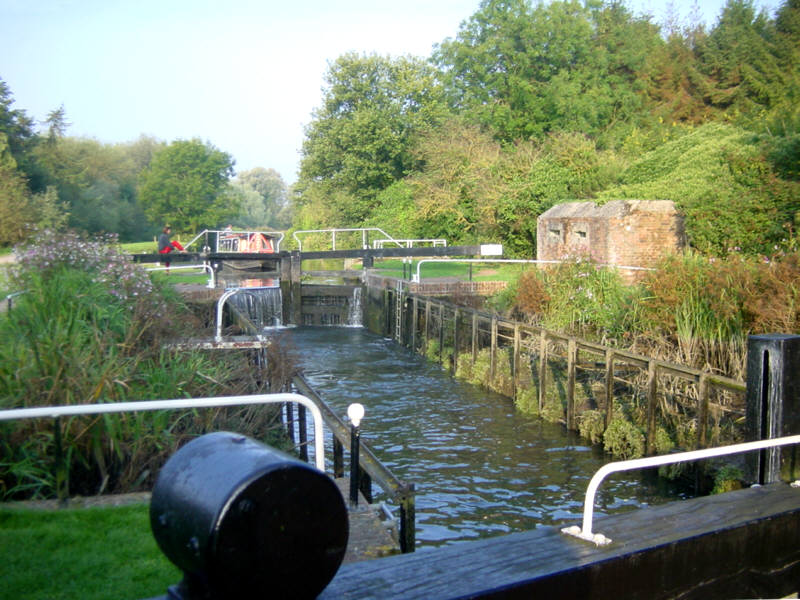
Garston Lock, on the Kennet and Avon Canal near Theale, is another example of a Kennet turf-sided lock, although it was modified during restoration to improve safety.
The lock was built in the 1720s. A number of the locks on the Kennet navigation were originally of this sloping-sided design, since water consumption was less of a problem on a river than on a canal. Only two remain. (See also Monkey Marsh Lock.)
See Google Aerial View of this location.
Showing posts with label Kennet and Avon. Show all posts
Showing posts with label Kennet and Avon. Show all posts
Friday, 27 June 2008
Garston Lock

Saturday, 21 June 2008
Bath
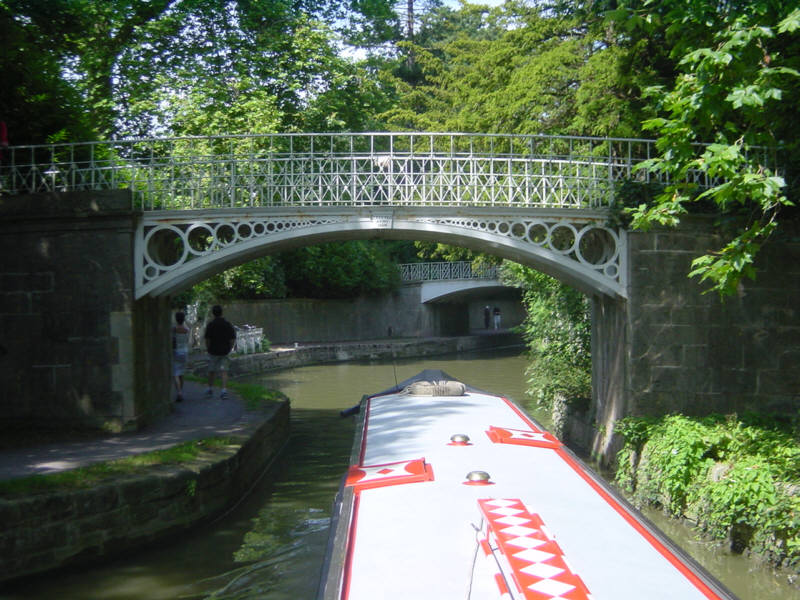
Just above the Widcombe flight of locks in Bath, the Kennet and Avon Canal passes through the middle of the Sydney Gardens. The gardens were Bath's first "park" and were visited frequently by Jane Austen.
They were created in 1795 and 15 years later, in 1810, the canal was constructed through the middle. Later still, in 1840, the Great Western Railway carved a parallel cutting through the gardens.
See Google Aerial View of this location.
See LiveSearch Birds Eye View of this location.
Tuesday, 3 June 2008
Avoncliffe
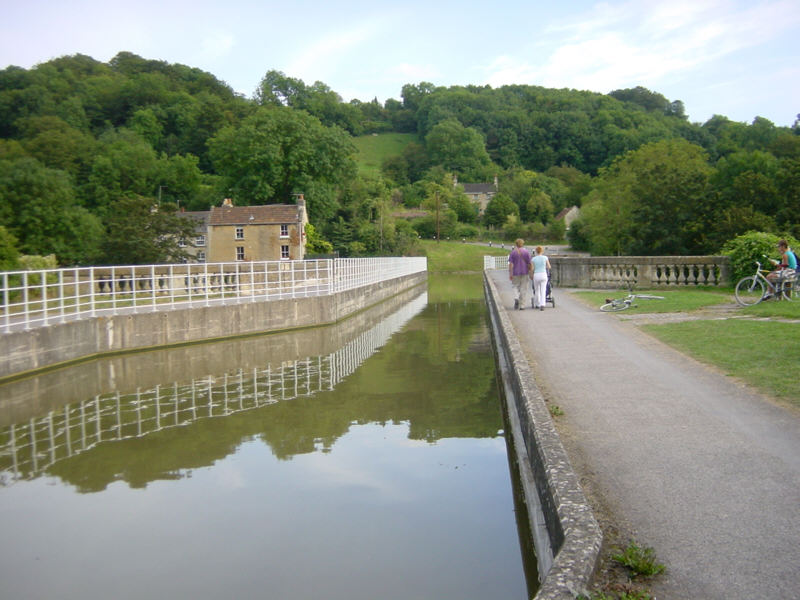
Avoncliffe Aqueduct carries the Kennet and Avon Canal across the River Avon one and a half miles west of Bradford-on-Avon. Just behind the camera, the canal narrows again to cross the railway.
See Google Aerial View of this location.
Saturday, 24 May 2008
Widcombe, Bath
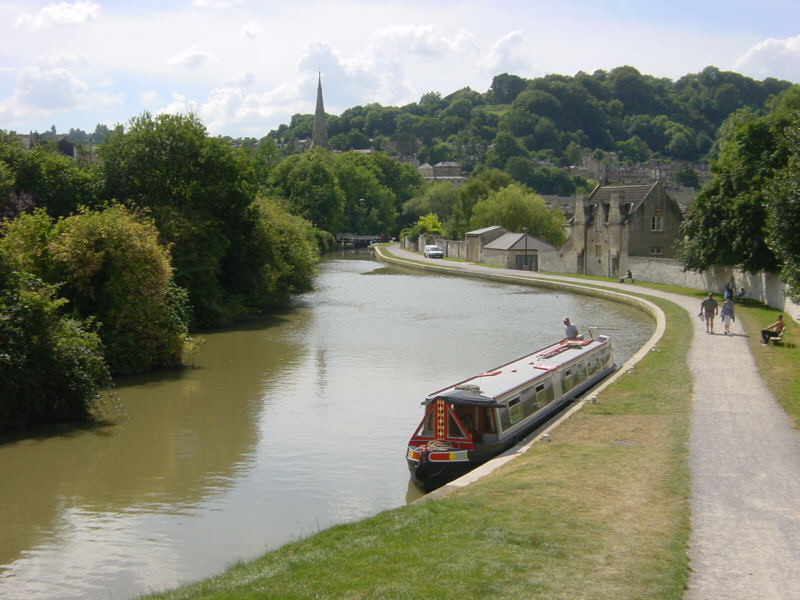
A longish pound between locks on the Widcombe flight on the Kennet and Avon Canal in Bath.
See Google Aerial View of this location.
See LiveSearch Birds Eye View of this location.
Saturday, 17 May 2008
Monkey Marsh Lock
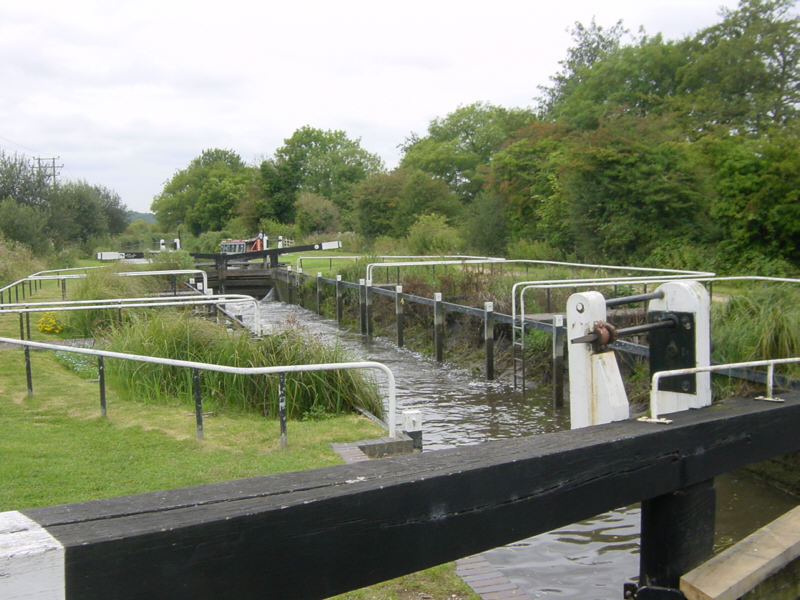
Monkey Marsh Lock is one of the two remaining "turf-sided" locks on the River Kennet section of the Kennet and Avon Canal.
Using timber and turf for construction, this was an early style of lock-building used on some river navigations. Because of the sloping sides, they use more water than conventional locks, but this is less important on a river. Modern metal posts have been added as a safety feature, to prevent boats from settling on the sloping sides as the lock empties.
Monkey Marsh Lock is near Thatcham Station and about 3 miles east of Newbury in Berkshire.
See Google Aerial View of this location.
Wednesday, 7 May 2008
Dundas Aqueduct

The mighty Dundas Aqueduct that carries the Kennet and Avon Canal across the River Avon near Limply Stoke, south-east of Bath. A Grade One listed building, it was the first canal structure to be scheduled as an Ancient Monument.
On the western side of the aqueduct is the junction with the Somersetshire Coal Canal. This ran some 18 miles to Paulton, with a branch to Radstock and Midsomer Norton. Only a 200 metre stretch of the canal is now open from the junction at Dundas and is used as moorings.
See Google Aerial View of this location.
Saturday, 3 May 2008
Crofton
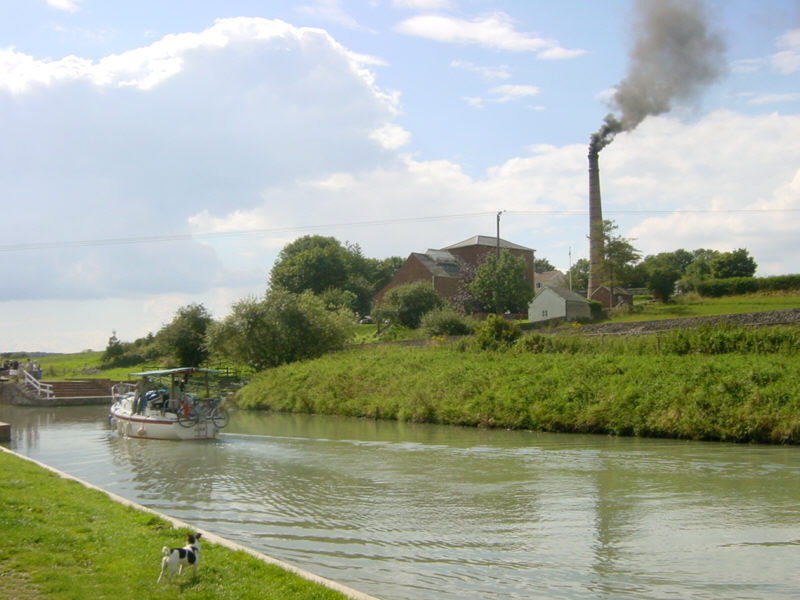
Crofton Pumping Station, 6 miles from Marlborough, pumps water up six locks to the summit level of the Kennet and Avon Canal. The Pumping Station houses two Cornish steam-powered beam engines, one of which, built in 1812, is claimed to be "the oldest working beam engine in the world still in its original engine house and capable of actually doing the job for which it was installed". [read more]
The pump took water from natural springs and later a small lake that was created to the south of the canal - see aerial photo.
See Google Aerial View of this location.
The building is open daily in the summer months and is on steam on certain days. [see dates]
Sunday, 20 January 2008
Caen Hill Locks
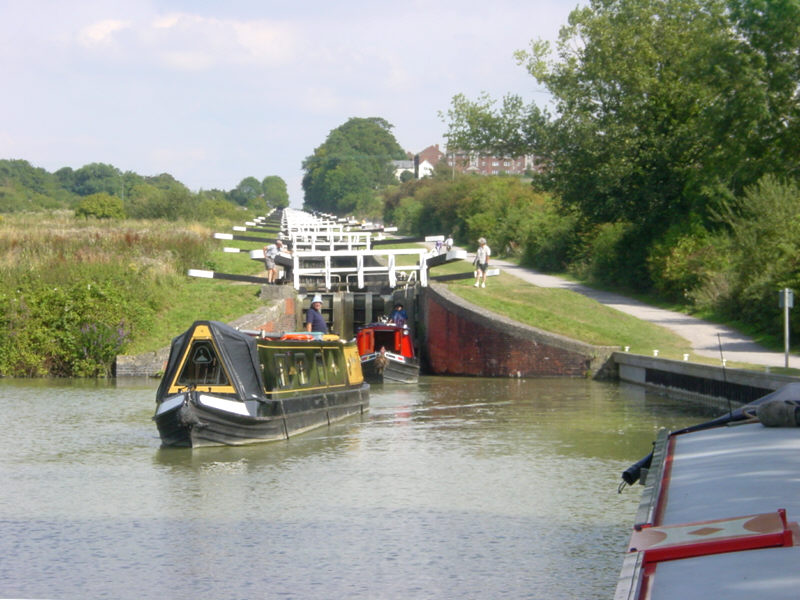
Caen Hill Locks are on the Kennet and Avon Canal just west of Devizes in Wiltshire. There are 29 locks altogether at Caen Hill, spread over about 2 miles. However, the middle 16 locks are the most impressive, being in a straight line up the steep hillside. There is just a short pound between locks, but each pound extends sideways to store an adequate volume of water.
See Google Aerial View of this location.
Subscribe to:
Posts (Atom)